
Will Writing Service London: A Clear Guide to Making a Will

What if the people closest to you aren’t the people who inherit your estate? Without a valid will, intestacy rules decide how your estate is distributed, and an unmarried partner isn’t provided for as a partner under those rules. A will writing service London families can rely on should help turn personal wishes into clear decisions, not leave important details unresolved.
It’s understandable to focus on who should inherit, but a will must also be properly prepared and signed to be effective. This guide explains what a will can and can’t do, what to consider when choosing beneficiaries and executors, and how signing and witnessing work in England and Wales.
You’ll also learn when professional estate-planning advice may be useful, particularly if you have children, a blended family, business interests or property overseas. A will is one part of a considered plan, and specialist guidance can help bring your wishes and wider estate arrangements into line. Staple Inn Notaries provides wills and estate planning as part of its private-client services across Central London and the wider London area.
Table of Contents
Why make a will in London, and what can it decide?
A will is a legal document that sets out how specified matters relating to your estate should be handled after your death. It can name your intended beneficiaries, appoint people to administer your estate and, in some circumstances, nominate guardians for minor children. A general overview of wills explains the document’s history and terminology, but the rules that apply depend on the relevant jurisdiction.
A will directs how assets forming part of your estate are dealt with; it cannot determine matters governed by law or arrangements outside the will. This distinction matters when considering how your wishes fit into wider estate planning. A will writing service London clients use can help organise those decisions, while tailored advice may be useful when family or financial arrangements are more complex.
What can a will set out?
A will can name beneficiaries and specify what they are to receive. You might leave a particular item to one person or set out how the rest of your estate is to be divided. Clear instructions can reduce uncertainty, but they need to reflect your circumstances and meet the legal requirements.
You can also appoint one or more executors. An executor is responsible for dealing with the estate in accordance with the will and the applicable legal process. Naming someone does not complete the administration: they may need to take formal steps, including applying for a grant of probate where required.
Parents may include an appointment of a guardian for a minor child. Its effect depends on the family’s circumstances and applicable law, so consider it carefully rather than treating it as a substitute for discussing care arrangements.
What happens if someone dies without a will?
If there is no valid will covering the estate, intestacy rules determine who may inherit. In England and Wales, those rules provide for a spouse or civil partner and certain relatives, but an unmarried partner is not provided for as a partner under intestacy. The outcome depends on which relatives survive and the person’s circumstances, so the legal distribution may not match their wishes.
Intestacy rules differ across the UK, so the person’s location and circumstances matter. Scotland and Northern Ireland have their own succession rules, and cross-border assets can add complexity. If your family situation, property or other estate arrangements involve more than one jurisdiction, seek tailored legal advice before relying on a general explanation.
What should a well-prepared will include?
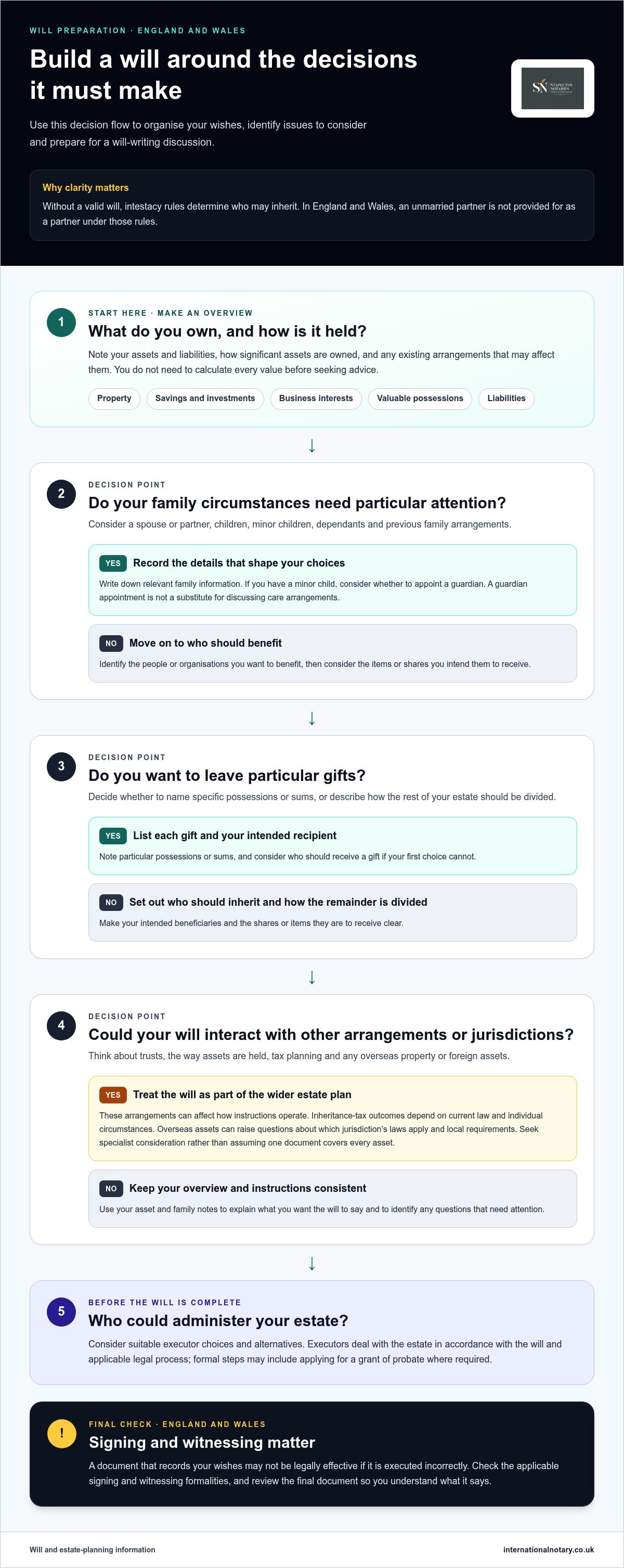
Start with the decisions your will needs to express, rather than filling in a generic form. A clear record of what you own, who you want to benefit and any family responsibilities gives a will-writing discussion a practical foundation. Citizens Advice offers guidance on how to prepare your will; where your circumstances are more involved, individual legal advice can help connect the details.
Which decisions and details should you prepare?
Gather an outline of your assets and liabilities, noting how significant assets are owned and whether existing arrangements may affect them. Include property, savings, investments, business interests and valuable personal possessions where relevant. You don’t need to calculate every value before seeking advice, but a reliable overview helps identify questions that need attention.
Beneficiaries: List the people or organisations you want to benefit and the shares or items you intend them to receive.
Specific gifts: Note particular possessions or sums you may wish to leave, and consider who should receive them if your first choice cannot.
Executors: Consider who can take on the responsibility of administering your estate, communicating with beneficiaries and handling the necessary paperwork. Discuss suitable choices and alternatives.
Family circumstances: Record relevant details about a spouse or partner, children, minor children, dependants and previous family arrangements. These details can affect how your choices should be framed.
Use this list to identify decisions, not to settle every legal detail alone. A will writing service London residents use can help organise your instructions and clarify any issues that need further consideration.
How do trusts, tax planning and overseas assets fit in?
A will may need to work alongside existing trusts, other estate-planning arrangements and the way assets are held. These elements can affect how your instructions operate, so consider them together rather than as separate paperwork.
Inheritance-tax outcomes depend on current law and individual circumstances, including the nature and ownership of assets and the intended beneficiaries. If you’re considering how to align your will with tax planning, read more about inheritance tax planning advice. Overseas property or other foreign assets can raise questions about which jurisdiction’s laws apply and how the will interacts with local requirements. Seek specialist consideration before assuming one document will deal with every asset.
For tailored support in organising your decisions, you can discuss your will and estate-planning requirements with Staple Inn Notaries, serving Central London and the wider London area.
Is a simple template enough, and how is a will made valid?
A template isn’t automatically invalid, but a document that records your wishes may still fail to meet the legal formalities or suit your circumstances. Accuracy matters as much as wording: unclear provisions, omissions or an incorrect signing process can create uncertainty about whether the will is effective or how it should be administered.
What are the general signing and witnessing requirements?
In England and Wales, section 9 of the Wills Act 1837 sets out the execution requirements. The will must be in writing and signed by the person making it, or by another person in their presence and at their direction. The signature must be made or acknowledged in the simultaneous presence of two witnesses, who must each sign or acknowledge their signature in the will-maker’s presence. The will-maker must be aged 18 or over, except for limited exceptions, and must act voluntarily with testamentary capacity.
For a will to meet the general formalities in England and Wales, it must be written, signed by an eligible will-maker, and witnessed by two people present together, each of whom signs or acknowledges their signature in the will-maker’s presence. Follow the sequence carefully. A witness, or their spouse or civil partner, should not witness the will if named to receive a gift: the gift to that witness or partner may fail, even though this does not automatically invalidate the entire will. Choose independent witnesses and ensure they are over 18.
These are the general rules for England and Wales, not a UK-wide summary. Scotland and Northern Ireland have different rules, so a will connected with another UK jurisdiction needs advice specific to that jurisdiction.
When might a template fail to address your circumstances?
A straightforward estate and clear family arrangements may be easier to document than an estate involving several interacting interests. A standard template may not prompt the right questions or explain how a clause affects other arrangements. A will writing service London residents seek can help identify where individual drafting or advice may be needed.
Blended families or dependants: Consider how to provide for different family members and explain your intentions clearly.
Business interests or trusts: Check how the will should fit with ownership arrangements, existing trust documents and succession plans.
Overseas assets: Different jurisdictions may impose different rules, and one document may not address every issue.
Review existing wills and related documents before signing a new one. Conflicting instructions or imprecise wording can create avoidable uncertainty and potential disputes. Tailored estate-planning advice can help ensure the document reflects your decisions and is executed correctly.
How to prepare for a will-writing appointment and review your will
A little preparation can make a will-writing discussion more focused. You don’t need to resolve every question beforehand: your adviser can explain options and implications, but the decisions about your wishes remain yours. A will writing service London clients use should help turn your information and priorities into clear instructions and identify matters that need further consideration.
What information should you bring to discuss your will?
Prepare a broad overview rather than waiting until every figure is exact. Note your main assets and liabilities, who you may wish to benefit, and relevant relationships, including children and dependants. Bring copies of your current will and any documents relating to trusts or Lasting Powers of Attorney, if available.
Also list business interests or property outside the UK, as these may affect how your estate plan is considered. Write down questions about who could act as executor or guardian, any specific gifts you have in mind, and practical concerns about administering your estate. This gives your adviser a clearer picture of how the decisions fit together.
When should you consider reviewing a will?
Review your will when your circumstances change, rather than assuming an older document still reflects your intentions. Marriage or separation, a new child or dependant, a change in your relationship with a beneficiary, or a substantial change to your assets may prompt a fresh review. Moving home or acquiring overseas property can also raise questions about the will’s scope and the rules that may apply.
The legal effect of a life event depends on the applicable law and the wording of your document. Don’t assume a change automatically updates your will, or that an existing provision will continue to work as intended. Ask for a legal review and make any required changes through the correct process.
Bring your questions forward, including how your will relates to trusts, inheritance-tax planning or other estate arrangements. Staple Inn Notaries provides private-client legal advisory services alongside wills and estate planning, helping clients consider connected matters as part of a wider plan.
Discuss your will and estate-planning requirements with Staple Inn Notaries, serving Central London and the wider London area.
Will writing service in London: how specialist guidance fits your estate plan
A will is most useful when its instructions reflect both your intentions and the practical arrangements needed to administer your estate. Decisions about beneficiaries, executors and specific gifts may connect with existing trusts, tax planning or the way assets are owned. Considering these together can help identify gaps or conflicting instructions before they create uncertainty for those dealing with your estate.
What can a will-writing discussion help you clarify?
Specialist guidance can help organise your priorities and explain how different choices may affect your will. For example, leaving an asset to a particular person may need to be considered alongside joint ownership, a trust or other estate arrangements. Consider an executor appointment in light of the responsibilities involved and the needs of beneficiaries.
Questions about inheritance tax, trusts and probate may need coordinated consideration, but the right approach depends on your assets, family circumstances and the law in force. No general explanation can determine the outcome for every estate. Staple Inn Notaries provides wills and estate planning alongside probate administration, trust administration and inheritance tax planning as part of its private-client work. The firm is operated by specialist lawyers regulated by the Faculty Office of the Archbishop of Canterbury.
A will writing service London residents use can form part of a broader estate-planning discussion, connecting personal instructions with relevant administration and planning considerations. Advice should clarify your options, not make personal decisions for you.
What is a practical next step for London residents?
Before making contact, note your main questions and gather a broad outline of your assets, family circumstances, intended beneficiaries and any existing wills or trust documents. Include concerns about executors, gifts, tax planning or the administration of your estate. You don’t need to have every decision settled; a clear starting point helps focus the discussion.
Staple Inn Notaries serves clients in Central London and the wider London area. Its private-client work brings will-writing guidance into the context of wider estate planning, with advice shaped around individual circumstances.
Discuss your will and estate-planning needs with Staple Inn Notaries.
Put clear intentions into a considered estate plan
A well-prepared will should reflect your wishes, identify who will administer your estate and be executed in accordance with the rules that apply. Organise information about your assets, beneficiaries and family circumstances, then review the document when your life or finances change. Where trusts, inheritance tax or overseas assets are involved, tailored advice can help bring those considerations into the wider plan.
A will writing service London residents can access through Staple Inn Notaries forms part of the firm’s private-client work. Wills and estate planning sit alongside probate administration, trust administration and inheritance tax planning, connecting the document with relevant estate-administration matters.
Start with your questions and the decisions you want to discuss. Contact Staple Inn Notaries to discuss will writing and estate planning. With clear guidance, you can take a practical next step towards a will that reflects your intentions.
Frequently Asked Questions
Do I need a solicitor to write a will in England and Wales?
No, you don’t have to use a solicitor, but the will must meet the legal requirements to be valid. A straightforward estate may be easier to document, while dependants, trusts, business interests or overseas assets can raise questions that need individual advice. A will writing service London residents use can help clarify the decisions and formalities involved. Staple Inn Notaries provides wills and estate planning as part of its private-client services in Central London and the wider London area.
What happens if I die without making a will?
If you die without a valid will, intestacy rules determine who may inherit your estate. The result depends on your family circumstances and the law applying in the relevant UK jurisdiction. In England and Wales, an unmarried partner isn’t treated as a partner entitled to inherit under intestacy rules, even if you’ve lived together for many years. If your family arrangements are complex, tailored advice can help explain how the rules may apply to your circumstances.
Can I write my own will using a template?
Yes, you can use a template, and it isn’t automatically invalid. However, the document still needs to meet the applicable legal formalities, express your intentions clearly and address your circumstances. Errors in signing, unclear instructions or omissions can create uncertainty. A template may not adequately address matters such as blended families, trusts, business interests or overseas assets. Consider professional guidance if you’re unsure whether the wording or execution is appropriate.
Who can witness a will in England and Wales?
For the general signing process in England and Wales, two witnesses aged 18 or over must be present together when you sign or acknowledge your signature, and each must sign or acknowledge their signature in your presence. Avoid choosing a beneficiary, or their spouse or civil partner, as a witness: the gift to that person may be void, although the whole will isn’t necessarily invalid. Follow the signing sequence carefully.
How often should I review my will?
Review your will after significant changes, such as marriage, separation, a new child or dependant, a change in your assets, or acquiring overseas property. These events can affect whether the document still reflects your wishes, but their legal effect depends on the applicable law and the will’s wording. Don’t assume a life event automatically updates your will. Arrange a legal review when circumstances change, and check that your executor and beneficiary choices remain suitable.
Does a will cover property or assets held overseas?
It depends on the asset, the jurisdiction where it is held and the will’s wording. Overseas property may be subject to local succession rules, and a will made in England and Wales may not address every issue arising abroad. In some circumstances, separate or coordinated documents may need consideration. Don’t assume one will automatically governs all assets internationally. Seek specialist advice that takes account of the relevant jurisdictions and your wider estate arrangements.
Is a will the same as a Lasting Power of Attorney?
No. A will sets out instructions for specified estate matters after your death. A Lasting Power of Attorney (LPA) allows appointed people, known as attorneys, to make decisions on your behalf during your lifetime if the LPA’s conditions are met. It doesn’t replace a will, and authority under an LPA ends when you die. The documents serve different purposes, so consider both as part of wider estate planning where appropriate.



Comments